There’s a particular kind of discomfort that comes with making a decision when you don’t know how it’s going to turn out.
You can think it through. Weigh the options. Ask people you trust. Make a list of pros and cons.
You can consider every possible outcome you can imagine.
And still, eventually, you have to choose without knowing what happens next.
I think that’s the part we sometimes struggle with most.
Not necessarily making the decision itself, but accepting that we can’t know in advance whether it will work out the way we hope.
What if I choose this and regret it?
What if the other option would have been better?
What if I’m missing something important?
What if I make the wrong choice?
Sometimes these are useful questions. There may be information we haven’t considered, consequences we need to think through, or people whose perspectives would help us.
But sometimes we’ve considered everything we reasonably can.
And we’re still waiting.
Waiting for a sign.
Waiting to feel certain.
Waiting for the moment when one option finally feels so obviously right that choosing it no longer feels like a risk.
I wonder how much of our lives we spend waiting for that feeling.
Because certainty can be awfully reassuring. If we could know that we were making the right decision, we could move forward without having to worry about what might happen if we weren’t.
We could choose without risking regret.
We could act without having to live with the possibility that things might not work out.
But that’s not quite how decisions work, is it?
We make them with the information we have, the circumstances we’re in, the resources available to us, and the understanding we’ve developed so far.
And then life continues.
New information arrives. Circumstances change. Other people make their own choices. Things we couldn’t have anticipated become relevant.
Sometimes our decisions work out beautifully.
Sometimes they don’t.
Sometimes we make a thoughtful decision and still get an outcome we never wanted.
And sometimes we make a decision that seemed right at the time and later realize we’d choose differently now.
I don’t think any of that necessarily means we failed to trust ourselves.
It means we made a decision without having access to the future.
Which is, unfortunately, the only kind of decision most of us get to make.
When I read tarot, I’m not trying to take someone’s uncertainty away by handing them a predetermined answer.
I’m more interested in the questions the cards help us ask.
What does this card bring to mind?
What does it invite you to consider?
Does it resonate with something you’re already sensing, or does it offer a perspective you hadn’t entertained?
Sometimes we need a different lens to notice something we couldn’t see from where we were standing. We might discover an influence we hadn’t considered, recognize a strength we haven’t thought to draw on, or begin to understand why we’re hesitating over something we otherwise want.
That’s what draws me to tarot and astrology. Not the promise of a predetermined future, but the opportunity to explore the patterns, possibilities and influences that might help us meet our lives more consciously.
A pattern can offer context without becoming a verdict. A possibility can be worth considering without becoming a promise. And something that resonates with us doesn’t have to dictate what we do next.
You don’t have to agree with every interpretation. You don’t have to treat a card as an instruction. And you certainly don’t have to hand your judgment over to it.
The reading is part of the conversation, not a replacement for your own voice.
My intention, when I read for someone, is to remind them of their own agency and empower them to take control of their own lives instead of putting their future in someone else’s hands.
We can seek perspective without seeking permission. We can take what feels useful, question what doesn’t, and decide what we want to do with what we’ve learned.
And then we still get to choose.
I think self-trust can get tangled up with the idea that we should be able to recognize the right choice when we see it.
That if we really knew ourselves, listened to our intuition, or thought things through properly, we’d be able to choose correctly.
But that puts an awful lot of responsibility on us to predict things we cannot possibly know.
And when the outcome isn’t what we wanted, it gives us a convenient reason to turn around and put ourselves on trial.
I should have known.
I knew better.
Why didn’t I listen to myself?
Sometimes, in retrospect, we can identify something we missed. We can recognize a warning sign we dismissed or information we didn’t have at the time.
That can be useful.
But there’s a difference between learning something from a decision and deciding we should have been able to predict everything that followed it.
We don’t get to make choices with hindsight.
We make them with what we know at the time.
And perhaps trusting ourselves means allowing that to be enough.
Not because our judgment is infallible.
Not because we will always choose well.
But because we can make a considered choice without demanding that it come with a guarantee.
We can listen to ourselves, seek information, acknowledge uncertainty, and decide what seems right given what we know.
And then we can meet what happens next.
If we learn something, we can take it into account.
If our circumstances change, we can reconsider.
If we discover that we want something different, we can change our minds.
We don’t have to defend every decision we’ve ever made just because we made it.
We don’t have to keep walking down a path simply to prove that choosing it was the right thing to do.
And we don’t have to interpret every unexpected outcome as evidence that we should never have trusted ourselves in the first place.
Sometimes a choice is right for the person we are, with the information we have, in the circumstances we’re navigating.
And later, we become someone with different information, different needs, or a different understanding of what matters.
We are allowed to respond to that.
I think there’s something freeing about separating self-trust from certainty.
Because if I can only trust myself when I know I’ll get things right, then my self-trust depends on something I can never guarantee.
But if I can trust myself to listen, consider, choose, learn, and respond, then I have somewhere to stand even when the outcome is uncertain.
I don’t need to know that everything will work out.
I don’t need to believe that the universe has arranged things in my favour.
I don’t need to find a sign that tells me which future I’m supposed to choose.
I can be curious about the possibilities without treating them as promises.
I can hope for a particular outcome without assuming it’s the only one I could live with.
I can be afraid of making the wrong choice and still make a choice.
And I can leave room for the possibility that I’ll learn something along the way.
Maybe self-trust isn’t the feeling that you’ve finally figured everything out.
Maybe it’s the willingness to participate in your own life even when you haven’t.
To make a decision without knowing how it ends.
To let yourself be a person who is learning rather than a person who is supposed to know.
To remember that the next choice you make doesn’t have to be perfect to be yours.
You don’t have to know how things will turn out to decide what to do next.
Sometimes you can simply make the best choice you can with what you know.
And trust yourself to meet what comes after.
Category: Astrology
-
Welcome
This is not a post about fixing anything.
It’s an invitation to pause, to notice, and to sit with what’s present—without needing to resolve it.
If you’ve found your way here because something feels off, unclear, or quietly resistant, you don’t need to name it yet.
You’re allowed to sit with this.I don’t offer answers here.
Not because I don’t have opinions, or experiences, or things I’ve learned the hard way; I do. But because answers, when they arrive too quickly, have a way of replacing something more important.
Listening.
This space exists for something slower than certainty. It exists for the questions that surface when you finally stop pushing through, the ones you might not have known how to ask because you were too busy coping, performing, or keeping things moving.
If you’re here, there’s a good chance something in your life isn’t working the way it used to. You may not know exactly what it is yet. You might not have words for it. You might only have a vague sense of friction, fatigue, or quiet resistance.
That’s enough.
You don’t need a fully formed understanding to be here. You don’t need to articulate anything neatly. You don’t need to arrive with insight, or clarity, or a plan for what comes next.
You’re allowed to sit with this.
A lot of spaces promise resolution. They want to help you fix, optimize, heal, or transcend. Often, very quickly. Often with the best of intentions. But I’ve learned, both personally and through years of listening to other women, that rushing to make meaning can become another way of overriding ourselves.
Sometimes the most honest thing you can do is admit, quietly, that something feels off, and stay there for a while.This is not a space for emotional bypassing. It’s not a place where discomfort needs to be reframed into a lesson, or smoothed over so it’s easier for others to digest. There’s no expectation that you move on, stay positive, or make your feelings productive.
There is no requirement to be consistent. No urgency to get anywhere. No pressure to turn what you’re feeling into something useful.
Insight can arrive slowly.
I’m not here as an authority over your inner life. I’m here alongside you, holding space for inquiry without coercion.What you notice, when you notice it, belongs to you. You don’t owe anyone an explanation for it, and you certainly don’t need to make it comfortable for someone else before it’s true for you.
If this feels like an exhale, you’re in the right place.
You’re allowed to sit with what’s present, without judgment or demand. You’re allowed to take your time. You’re allowed to feel your feelings without having to justify them.
Nothing needs to change right now.
-
A Magical Autumn Equinox 2022
It’s the autumn equinox!
An Autumn Equinox Overview
Spring Equinox Pisces (mutable water) to Aries (cardinal fire) Summer Solstice Gemini (mutable air) to Cancer (cardinal water) Fall Equinox Virgo (mutable earth) to Libra (cardinal air) Winter Solstice Sagittarius (mutable fire) to Capricorn (cardinal earth) Solstice and equinox transitions The Origins
The autumn equinox is the second holy day related to the harvest (Lammas is the first, in early August) and is a time of mysteries. It’s a period of bidding a grateful farewell to the abundance of summer in order to start preparing to survive the less fertile winter. In some traditions it represents the slaying of the Harvest Lord and the descent of the Goddess into the Afterlife to find her lost love. In Greek mythology, this is the story of the goddess of the harvest, Demeter, and her daughter with Zeus, Persephone. I’ll give a quick summary that may leave out details for the sake of brevity.
Zeus promised to allow Hades to marry one of his daughters and Hades chose the daughter he had with Demeter, Persephone. The two gods knew Demeter would never permit Persephone to marry Hades and concocted a plan to abduct her. Without Persephone, Demeter was wrathful and neglectful of her harvest duties which led to famine for the mortals. Hermes was dispatched by Zeus to retrieve Persephone who had (shockingly) fallen in love with Hades after he made the goddess of fertility her own personal garden that flourished beautifully.
When Persephone was reluctant to leave the underworld, Hades gave her six pomegranate seeds which she ate—in Greek mythology, it was believed that they would always be able to return if they ate food from their captor—and Zeus, after going head to head with Demeter and Persephone over where their daughter would reside, decided that she would spend the same number of months in the underworld each year as the number of pomegranate seeds she had eaten. Thus, the goddess of fertility leaves for the underworld on the fall equinox and the plants we rely on for nourishment wither, only to return for the spring equinox and give new life to crops.
Sumerians celebrated the goddess Inanna for the autumn equinox. Some Wiccan traditions call the fall equinox Mabon which is taken from Celtic and Welsh mythology. Mabon was known as the Child of Life and he was the son of Modron, the Earth Mother Goddess.
How You Can Celebrate the Autumn Equinox
Now that you have all this new information about gods and goddesses, you need to remember that they’re very vainglorious and love to be praised. You can still offer thanks to the earth even if you don’t have a particular affinity to one pantheon. Plus, if you’re in the Northern Hemisphere, the autumn equinox marks the start of temperatures cooling down so it’s a great time to take advantage of the last little while before it could be too cold to go outside for more than a few minutes.
- Visit a local orchard for agricultural offerings
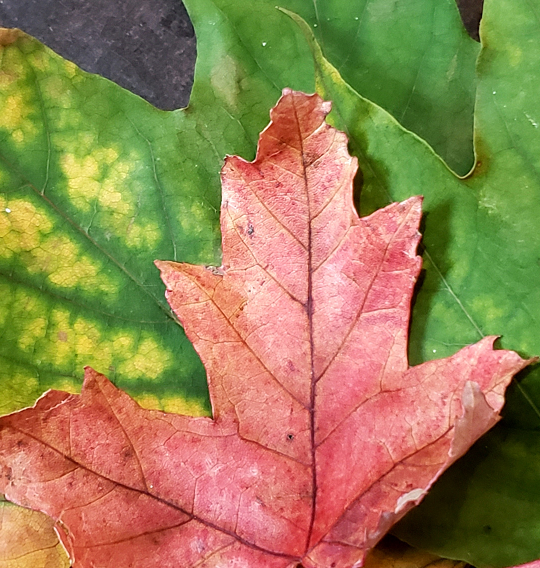
- Collect leaves in fall colours
- Make a specific project out of them
- Sprinkle them around your home (I suggest outside because uninvited guests can hitch a ride)
- Decorate with pinecones, acorns, and chrysanthemums
- Feast on apples, blackberries, grains
- Infuse your life with autumn colours
- Reds
- Browns
- Oranges
- Yellows
- Dark pinks
- Mauves
It’s okay to do all of these suggestions, some of them, or even none of them. I think it would be good for all of us, though, to take a minute outside to just think, and breathe, and give thanks to the world that sustains life. If you’re not feeling grateful about your own life (which is a disheartening but valid way of feeling), think about someone you love and be grateful their life has been sustained.
Books and Authors
- Scott Cunningham
- Silver RavenWolf
- Raymond Buckland
- Buckland’s Complete Book of Witchcraft
- Wicca For One: The Path Of Solitary Witchcraft
- Doreen Valiente
- Witchcraft for Tomorrow
- Charge of the Goddess
Enjoy your autumn equinox!

-
Cusps
As a departure from my previous entries, I’ve been thinking about astrology today. I can’t remember if it came first in my interests or the tarot, but I know I have the most books on the two of them in my personal library. Well before I was pregnant I picked up a book about astrological compatibility between children and parents (specifically mothers). I wasn’t trying to conceive at a certain point in time to have a baby that would be most compatible with me, but babies come when they want so it probably wouldn’t have gone according to plan.
I like my birthday, personally. That might sound weird because, really, who doesn’t? I just mean that I like the symbolism of it. My birthday is June 21st. It makes it hard to read a horoscope if you don’t know your natal chart because June 21st is right on the cusp of the signs of Gemini and Cancer, so much so that some sources end Gemini on it and others start Cancer on it. For the longest time I read both and analyzed my day in the evening to see which more lined up with the day’s events. Finally, I had my natal chart done and read an ephemeris.
My baby was due on September 5th, a nice, easy date for determining a Sun sign, but if you recall the first paragraph of this entry, babies come when they want. I have to confess, I was a little nervous about having a Virgo baby because I sometimes feel like I’m the antithesis of a Virgo. I knew there was nothing I could do, but hope I could make it work. I worried for nothing. My baby girl arrived a month and a half early: July 19th.
Cusps can be a controversial topic in astrology. With an ephemeris and a natal chart that explores the sign every planet was in at your birth, the cusp is not technically a thing, but I believe there is something to be said about being born so close to two Star signs (I definitely feel I have traits of both Gemini and Cancer). It’s also interesting to note many of my family members are born on the cusp of two signs—my mother, my sister, and now my daughter. Even my husband (who wouldn’t touch astrology with a ten-foot pole) is born close to the cusp of Scorpio and Libra.
If my girl possesses Cancer traits, Leo traits, or a combination of the two has yet to be seen, but I know she’ll be amazing.
Peace and balance,
Erin